
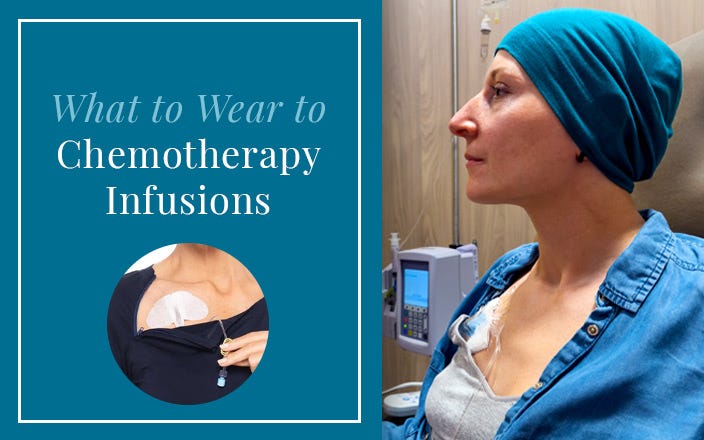
What are Chemo Ports?
If your cancer treatment will be administered via infusion, chances are you will have an infusion port installed. Until fairly recently – and possibly in some new cases or in hospitals still lacking expertise – patients received chemotherapy intravenously (IV) through a peripheral IV. In this case, a needle was inserted into a vein in the hand or arm, oftentimes each time a patient received a dose of chemotherapy. An exception to this would be for patients with fragile or hard-to-find veins. In this case, the patient would likely receive a “PICC line,” a peripherally inserted central catheter, a tube with an access point for veins that’s left in for what could be the entire chemotherapy treatment. A PICC line cannot get wet and sticks out from under the skin. It comes with risks and can make other ordinary activities awkward, so that’s why a PICC line is not the default go-to.
All About Implanted Chemo Ports (a.ka. Mediports)
These days, many cancer patients who will receive a lengthy treatment receive an implanted port (also called a Mediport). It is often installed under the skin of the upper chest, below the collarbone. Installation is a separate small procedure. The patient will be numbed and conscious or semi-conscious. For breast cancer patients, the port will be installed on the side opposite the diseased breast. After the port is installed, it will appear as a small, nickel-sized protrusion under the skin. There is no tube sticking out from the port, so once it’s installed, the patient can shower and do daily activities without PICC line risks. Immediately after the installation, some patients may experience initial discomfort as the skin adjusts; while the port is still in the body, discomfort may be felt when direct pressure is applied over the port, such as when wearing a seatbelt or a sports bra where the strap presses against the port.
Dressing for Access
If you are fortunate to get an implanted port, each time you go for a chemotherapy infusion, a nurse will have to access your port. This means they will need to also have access to this upper-chest area of your body. I was not thinking about this my first day of chemotherapy infusion…but I happened to get lucky with what I chose as a shirt: A long-sleeved, 100% cotton, V-neck collared t-shirt.
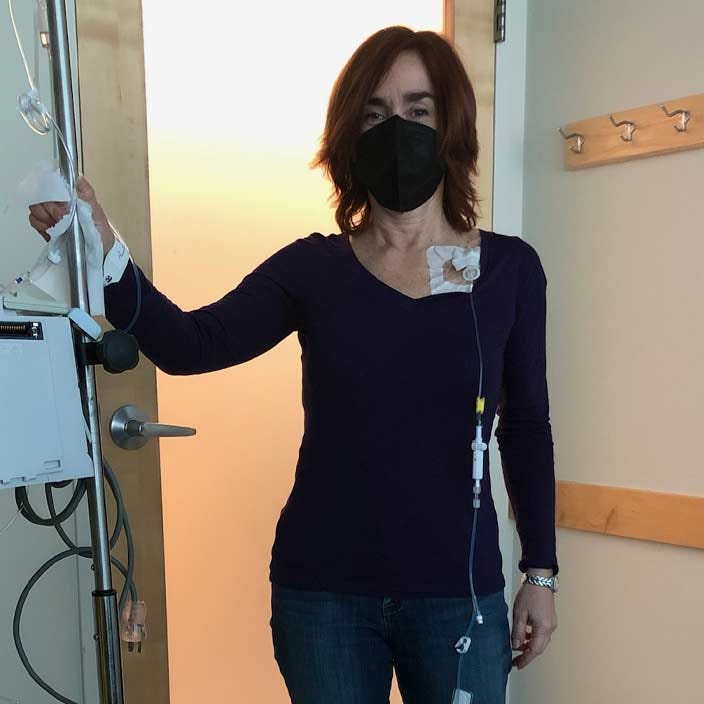

When my infusion center nurse that day commented on what a good choice I made and how that made her life a little easier in terms of accessing my port, I decided that I would keep mindful of this every time I had to get an infusion. This was actually a lot because I had 25 total infusions over the course of my year-long treatment.
- Key Takeaway: Wear a shirt with a neckline that makes access to your chemo port easier, such a v-neck, scoop neck, or a specially designed chemo port shirt.
Long Sleeves vs. Short Sleeves
I was also fortunate in my choice of a long-sleeved top, as infusion centers are often kept air-conditioned year-round and the liquids that are sent from the hanging bags in through the tube that’s temporarily connected to your port feel cold coming into the body. I was constantly cold in the infusion center so I chose to wear long-sleeved tops no matter what the temperature outside might have been like.
- Key Takeaway: Chemo can be cold! Wear a long sleeve shirt or bring a shawl, jacket, or cardigan
Feeling Comfortable During Chemo Infusions
Another factor in making it easier to access my port was my own comfort. If you aren’t wearing a shirt that makes it easy to access your port, the nurse is going to have to get at it somehow. This means that you may have to pull it all the way up and stay that way in the chair for your entire infusion; or the neckline of your shirt may need to be pulled and held out of the way which could stretch or permanently damage it. Since these solutions are not how your top was intended to be worn, you may find yourself uncomfortable and have more of your skin exposed than you would like there to be. And remember, you’re going to be in that infusion chair for a while – it could be about an hour or it could be several hours, depending on the number and kind of medications you’ll be receiving. Being comfortable in the chair, from top to bottom, is critical.
- Key Takeaway: Consider your level of comfort (both literally and in terms of modesty) and think about how infusion access might impact your clothing.
Embracing Your Personal Style
I will say another thing about the clothing I wore to my frequent chemotherapy infusions: I chose my entire outfit with deliberate intent. From my headcover to my shirt, pants, and boots, I wanted to feel empowered. Going through chemotherapy was bad enough; losing my hair and ultimately my eyebrows and eyelashes, too, was demoralizing. I wanted to feel as much like myself as I could, so I decided upfront to dress with style. I always wore my lucky 40-year-old Durango cowboy boots and built my entire outfit around them, so wearing tops that were both cute and comfortable helped my confidence at each session.
- Key Takeaway: Your feelings and sense-of-self are so important! Dress in a way that makes you feel beautiful, comfortable, and confident.
Back when I was going through chemotherapy, I didn’t even know if chemo port shirts were available, but they are today! Consider adding one or a few to your wardrobe to help make something about a not-great situation a little easier!